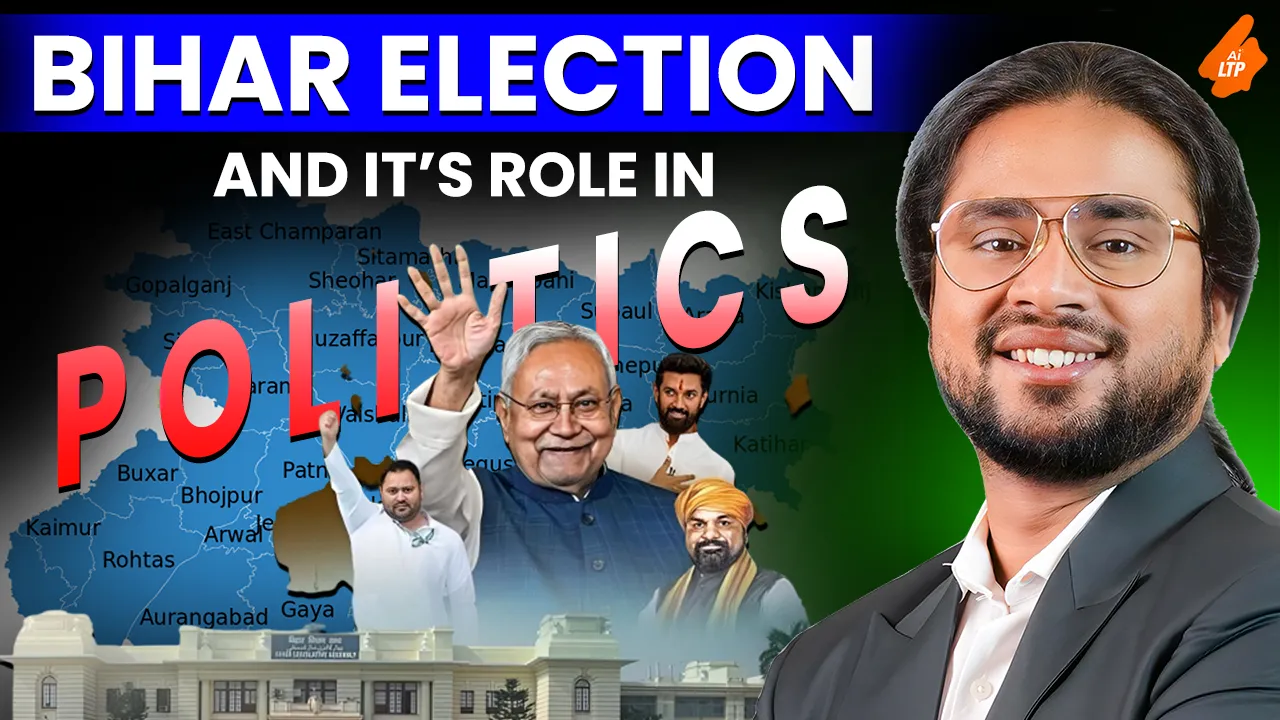

Bihar Election and Its Role in Indian Politics
Bihar has long been considered one of the most politically significant states in India. With its complex caste dynamics, history of social movements, and role in shaping coalition politics, every Bihar election is seen as a mini-referendum on the national mood. Unlike many other states, electoral outcomes in Bihar often carry ripple effects that shape alliances, leadership equations, and even central government strategies.
Historical Background
Bihar’s politics has been dominated by social justice movements since the 1970s. The rise of leaders like Jayaprakash Narayan, who launched the “Total Revolution,” created a tradition where Bihar became the testing ground for political experiments. Later, leaders such as Lalu Prasad Yadav and Nitish Kumar carried forward this legacy with politics centered around caste identities, backward class empowerment, and regional aspirations.
Why Bihar Matters
Bihar sends 40 Members of Parliament (Lok Sabha MPs), making it the fourth largest contributor after Uttar Pradesh, Maharashtra, and West Bengal. This number is crucial for any party aspiring to form or sustain a government at the Centre.
The state also has a large youth population, and issues like jobs, migration, education, and infrastructure play a decisive role in elections. Parties that succeed in connecting with these ground realities often gain momentum nationwide.
The Role of Caste and Social Equations
Caste remains at the heart of Bihar politics. The Yadavs, Kurmis, Koeris, Dalits, Muslims, and Upper Castes form key vote banks. No party can ignore these alignments. The Rashtriya Janata Dal (RJD), Janata Dal (United), Bharatiya Janata Party (BJP), and Congress each craft strategies to appeal to these groups, often leading to shifting alliances.
National Impact of Bihar Elections
1. Alliance Politics: Bihar is the birthplace of several coalition experiments. For instance, Nitish Kumar’s repeated switches between alliances (with RJD, BJP, and others) symbolize the fluid nature of Indian politics.
2. Leadership Testing Ground: Bihar has produced leaders with national influence, from Jayaprakash Narayan to Lalu Prasad Yadav and Nitish Kumar. Their ability to mobilize masses has influenced central policies.
3. Narrative Building: Bihar elections often decide national talking points. Issues like corruption, reservation policies, migration, and governance models first gain prominence here before spreading to national politics.
4. Symbol of Mandal vs. Kamandal Politics: The state is often seen as a battleground between caste-based politics (Mandal legacy) and religious/nationalist politics (Kamandal narrative).
Conclusion
Bihar elections are not just about who governs Patna; they are about shaping the balance of power in Delhi. With its vast population, historical legacy, and complex socio-political structure, Bihar will continue to remain a decisive player in Indian politics for years to come.
📌 Useful Links
• Election Commission of India – Bihar Elections: https://eci.gov.in
• PRS Legislative Research – Bihar Political Data: https://prsindia.org
• Statistical Reports of Lok Sabha & Vidhan Sabha Elections: https://eci.gov.in/statistical-report/statistical-reports
• Open your mutual funds account on below link & get your funds suggested by Dr. Vinay Prakash Tiwari: http://p.njw.bz/44600
• Open your demat account in Punch: https://punn.ch/ltp-on-punch
• Open a free demat account with Zerodha and start investing in stocks, derivatives, mutual funds, ETFs, bonds, IPOs, and more: https://zerodha.com/open-account?c=ZMPGFJ
Written by Dr. Vinay Prakash Tiwari, Founder – LTP Calculator Financial Technology Pvt. Ltd & Daddy’s International School & Hostel, Bishunpura Kanta, Chandauli, UP
