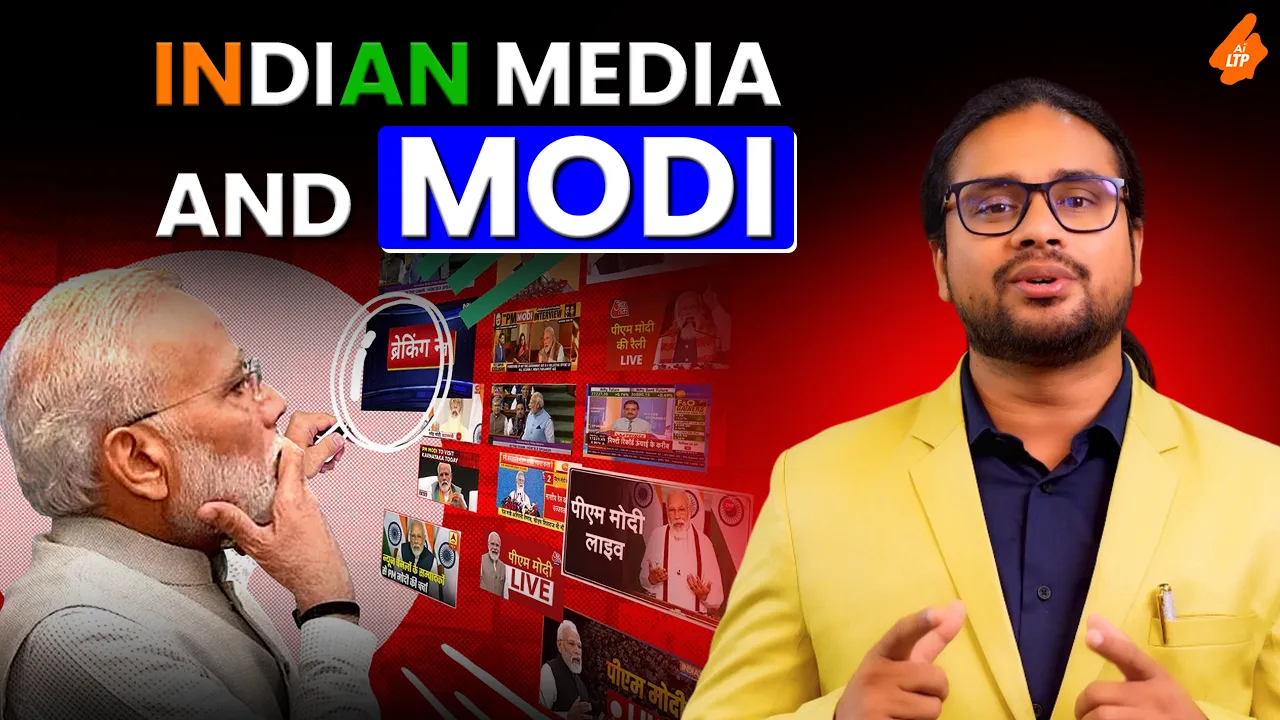

Indian Media and Modi: Supportive Voices vs Critical Voices
PM Narendra Modi’s leadership has divided not just politics but also the media landscape in India. Journalists, anchors, and commentators are often seen through two lenses — either critical of Modi’s policies or supportive of his governance. This divide has created one of the most vibrant yet polarizing media environments in the world.
Critical Voices
These journalists are known for their sharp questioning of the government and highlighting issues of unemployment, democracy, minorities, and farmers’ struggles. Their tone often resonates with citizens who want the government to be held accountable.
• Ravish Kumar – Ex-NDTV anchor, known for his relentless criticism of media silence and focus on common people’s issues.
• Rajdeep Sardesai – Senior anchor and columnist, often questioning government narratives on democracy and institutions.
• Barkha Dutt – Known for her field reporting, she has raised concerns on governance, gender issues, and press freedom.
• Abhisar Sharma – Popular digital voice, often critical of Modi’s policies and aggressive in questioning the ruling party.
• Arfa Khanum Sherwani – Senior journalist at The Wire, vocal on issues of minorities, democracy, and dissent.
Supportive Voices
These anchors and journalists are recognized for celebrating Modi’s achievements, projecting India’s rise, and often highlighting nationalism alongside news. They appeal to audiences who see Modi as a symbol of strength and decisive leadership.
• Sudhir Chaudhary – Known for his prime-time shows that often defend or glorify Modi’s policies with sharp nationalist narratives.
• Arnab Goswami – Republic TV anchor, famous for aggressive debates that strongly favor Modi’s governance and target opposition voices.
• Rubika Liyaquat – Popular TV anchor, often presenting news in a style that supports government positions.
• Anjana Om Kashyap – Aaj Tak anchor, known for her bold and supportive presentation of government achievements.
• Navika Kumar – Times Now anchor, frequently amplifies government narratives on nationalism and security.
• Sambit Patra (as panelist/doctor turned spokesperson) – While technically a politician, his regular presence in TV debates gives him the role of a strong media defender of Modi.
Ravish Kumar vs Sudhir Chaudhary: The Symbolic Divide
If one had to summarize this split in two faces, it would be Ravish Kumar vs Sudhir Chaudhary. One symbolizes the questioning, dissenting journalism that challenges Modi, while the other represents supportive, nationalist journalism that projects him as India’s strongest leader. The remaining names align broadly along these two camps, making Indian media a reflection of the nation’s political polarization.
Why This Divide Matters
Both sides are important for a democracy.
• Critical voices act as watchdogs, holding the government accountable.
• Supportive voices celebrate achievements, amplify optimism, and connect with the nationalist sentiment of the masses.
For viewers, the challenge is to consume both perspectives and form a balanced judgment.
📌 Useful Links
• Press Freedom in India – Reports & Rankings: https://rsf.org
• Indian Media Landscape Analysis: https://cmsindia.org
• World Bank – Democracy & Development Studies: https://worldbank.org
• Open your mutual funds account on below link & get your funds suggested by Dr. Vinay Prakash Tiwari: http://p.njw.bz/44600
• Open your demat account in Punch: https://punn.ch/ltp-on-punch
• Open a free demat account with Zerodha and start investing in stocks, derivatives, mutual funds, ETFs, bonds, IPOs, and more: https://zerodha.com/open-account?c=ZMPGFJ
Written by Dr. Vinay Prakash Tiwari, Founder – LTP Calculator Financial Technology Pvt. Ltd & Daddy’s International School & Hostel, Bishunpura Kanta, Chandauli, UP
