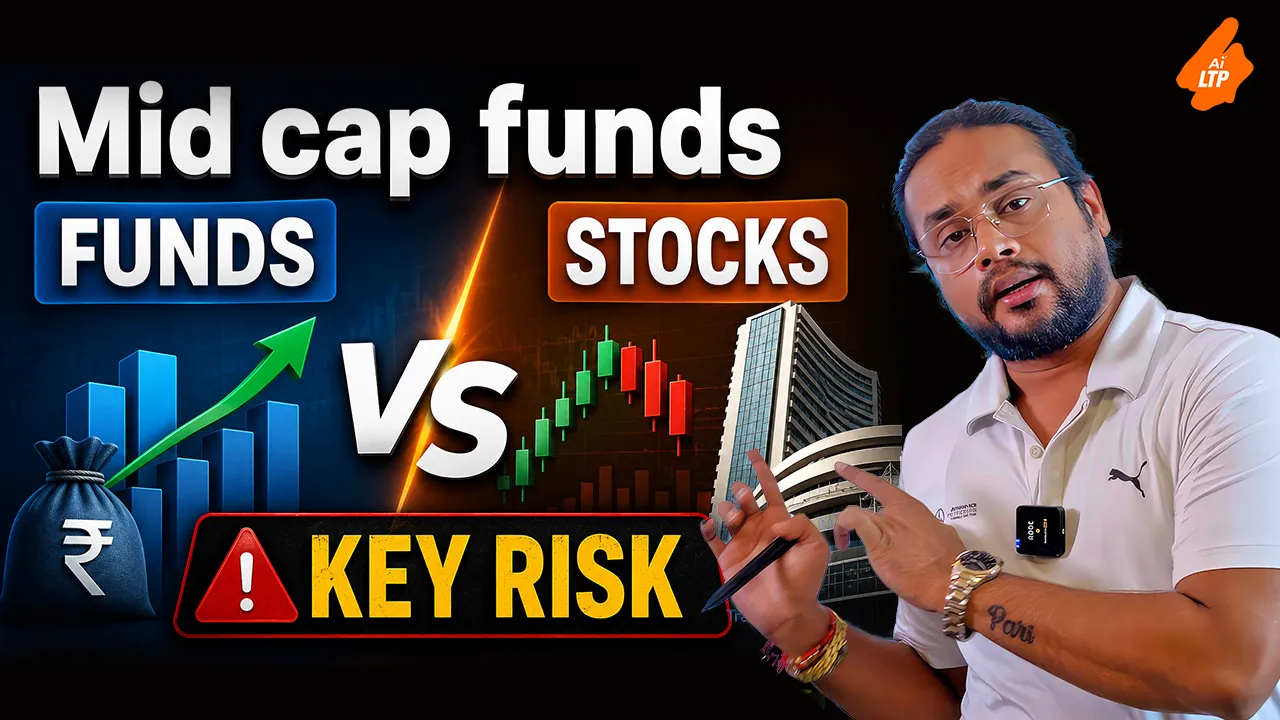

Risks of Investing in Mid Cap Mutual Funds vs Individual Stocks: What Every Investor Must Know
Mid cap investments offer strong growth potential but come with unique risks. The key question is whether to choose mutual funds or individual stocks. Each path carries distinct risk profiles that significantly impact your portfolio.
Understanding Mid Cap Risk Fundamentals
Mid cap companies (market cap ₹15,000 crore to ₹50,000 crore in India) carry more risk than large caps. These companies are past the startup phase but haven't achieved market giant stability. They face execution risks, competition pressures, and economic sensitivity causing significant price swings.
Diversification Risk
Mid cap mutual funds invest in 25 to 50 different stocks, spreading risk across multiple companies and sectors. Even if one company fails, it impacts your portfolio by only 2-4%. Individual mid cap stocks concentrate all risk in one or a few companies. If that company faces problems, you could lose 30-50% of your investment overnight.
Company-Specific Risk
With mutual funds, company-specific risks like accounting scandals or management changes get diluted across the portfolio. When investing in individual stocks, you bear 100% of company-specific risk. A regulatory issue or leadership crisis can wipe out your entire investment in that stock.
Management and Expertise Risk
Mutual funds introduce manager risk—your returns depend on the fund manager's skill. A poor manager can underperform the benchmark by 5-8% annually. However, you benefit from professional research teams and institutional access. Individual stock investing puts all management responsibility on you. Most retail investors lack institutional-grade research and miss critical red flags.
Volatility and Price Swing Risk
Individual mid cap stocks experience extreme volatility, with single-day swings of 5-10% being common. Mutual funds smooth out fluctuations because not all holdings move together. Your fund's NAV might swing 2-4% daily instead, making it easier to stay invested during market stress.
Liquidity Risk
Mutual funds offer daily liquidity at net asset value, meaning you can sell anytime at a transparent price. Individual mid cap stocks sometimes have low trading volumes. During market crashes, you might face wide bid-ask spreads or inability to sell at fair prices.
Cost and Expense Risk
Mutual funds charge expense ratios of 1.5-2.5% annually, reducing compounding returns by 20-25% over 10 years. Individual stocks have lower ongoing costs but involve brokerage and taxes on every trade. Frequent trading can make individual stock costs exceed mutual fund expenses.
Behavioral and Emotional Risk
Individual investors consistently underperform due to emotional decisions—buying high from FOMO and selling low from panic. Mutual funds enforce discipline through systematic investment plans and professional management, reducing behavioral mistakes.
Which Risk Profile Suits You?
Choose individual mid cap stocks only if you have 50+ hours monthly for research, can invest ₹10 lakh or more, have a 7+ year time horizon, and possess emotional discipline during crashes.
Choose mid cap mutual funds if you have less than 5 hours monthly, are investing ₹50,000 to ₹10 lakh, want professional management, and prefer SIPs.
Final Verdict
Individual mid cap stocks carry 3-4 times higher risk than mutual funds due to concentration, but offer 2-3 times higher return potential for skilled investors. For 90% of investors, mid cap mutual funds provide better risk-adjusted returns. Only choose individual stocks if you have the time, expertise, capital, and discipline to handle extra risk. Remember: in mid caps, diversification isn't optional—it's essential for survival.