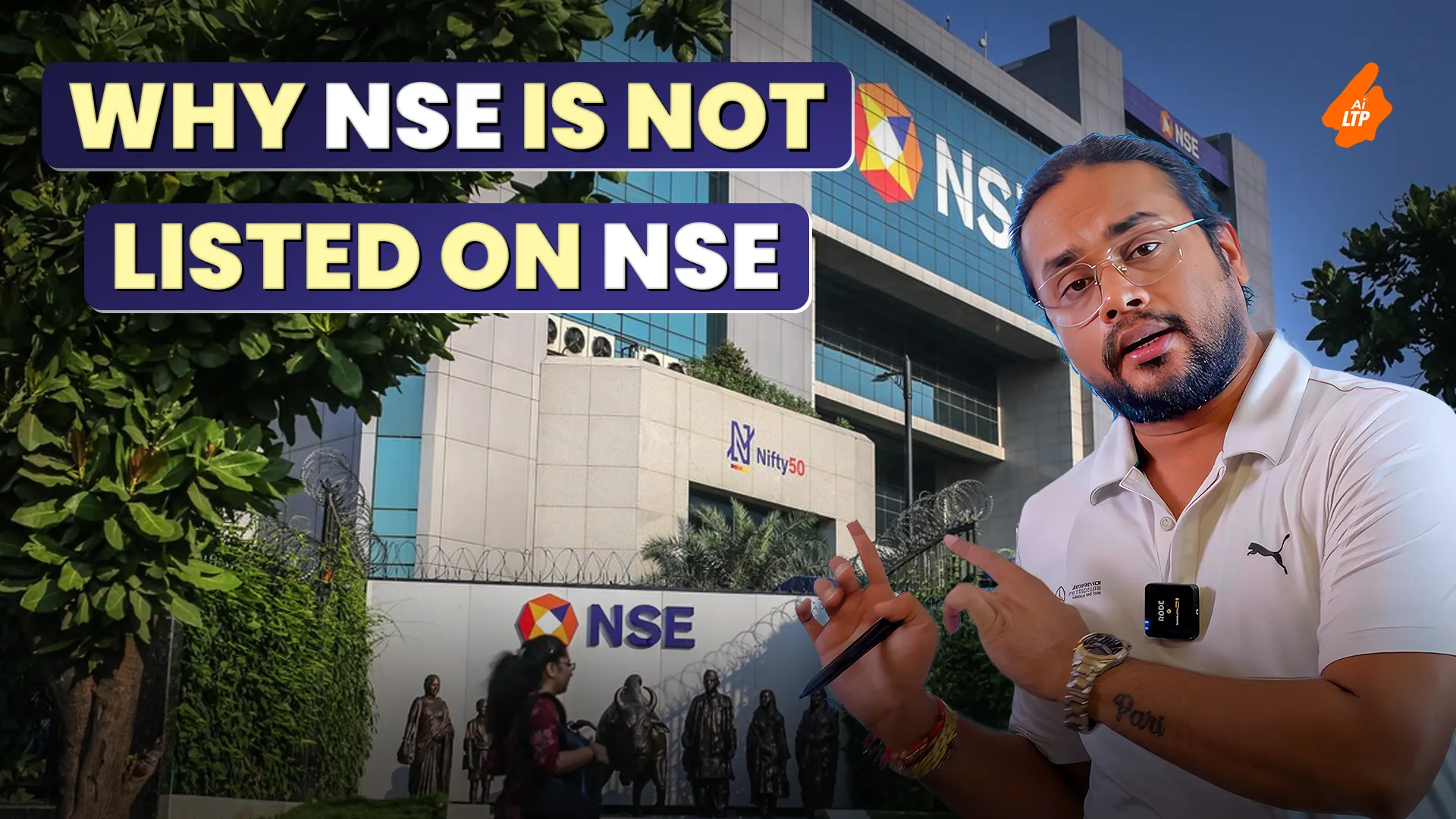

Why NSE is Not Listed on NSE
The National Stock Exchange (NSE) is India’s largest exchange and one of the most influential in the world. Naturally, people wonder: If NSE is the hub of stock listings, why is it not listed itself on its own exchange? The answer lies in a mix of regulatory hurdles, governance issues, and historical controversies.
1. The Regulatory Dilemma
SEBI, India’s market regulator, has always been cautious about exchanges being self-listed. The concern is conflict of interest — if NSE were to list on its own platform, it would act as both:
• Regulator of its listed stock (deciding compliance, monitoring trades), and
• Issuer (its own company being traded).
This dual role could compromise investor protection and create unfair advantages. That is why SEBI has not permitted NSE to list on NSE directly.
2. The IPO Delay
NSE has been preparing for an IPO for many years. It even got shareholder approvals and discussed valuations as high as ₹2 lakh crore. But the IPO has been delayed mainly because of regulatory investigations, especially related to the co-location scam (where some brokers allegedly got unfair access to NSE servers for faster trades). Until governance and compliance concerns are fully resolved, SEBI has not cleared NSE’s IPO.
3. International Precedents
Globally, exchanges like the New York Stock Exchange (NYSE) and London Stock Exchange (LSE) are publicly listed, but they are subject to strict external regulation. India is still building frameworks that would allow an exchange to be listed while ensuring that it doesn’t regulate its own stock.
4. Alternative Options
If and when NSE lists, it is likely to do so on the BSE (Bombay Stock Exchange) rather than NSE itself, to avoid the self-regulation conflict. In fact, BSE itself is listed and trades on its own platform, but NSE’s size and dominance make regulators more cautious in its case.
Conclusion
NSE is not listed yet because of:
• Conflict of interest risks if listed on its own platform.
• Pending regulatory clearance due to past governance issues.
• SEBI’s cautious stance on large exchanges going public.
Whenever it does list — likely on BSE — it will be one of the most significant IPOs in Indian history.
📌 Useful Links
• NSE India official site: https://www.nseindia.com
• BSE India official site: https://www.bseindia.com
• SEBI circulars & investor guidelines: https://www.sebi.gov.in
• Open your mutual funds account on below link & get your funds suggested by Dr. Vinay Prakash Tiwari: http://p.njw.bz/44600
• Open your demat account in Punch: https://punn.ch/ltp-on-punch
• Open a free demat account with Zerodha and start investing in stocks, derivatives, mutual funds, ETFs, bonds, IPOs, and more: https://zerodha.com/open-account?c=ZMPGFJ
Written by Dr. Vinay Prakash Tiwari, Founder – LTP Calculator Financial Technology Pvt. Ltd & Daddy’s International School & Hostel, Bishunpura Kanta, Chandauli, UP
⚠ Disclaimer: This blog is for informational purposes only. It does not provide investment or legal advice. Always rely on official SEBI and exchange guidelines for compliance and investment decisions.
